

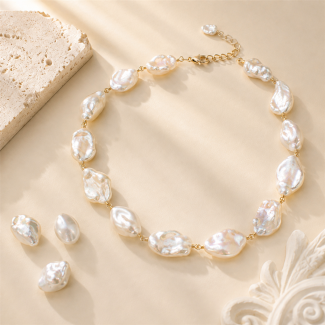
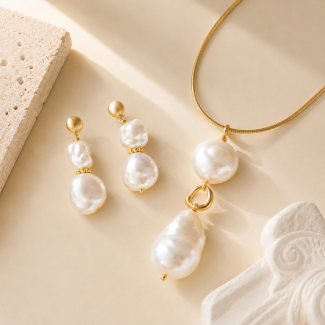
You cannot prove that pearls are real with one home test. Surface texture, drill holes, weight, temperature and matching can provide clues, but well-made imitations can reproduce several of them. When identity or value matters, seller documentation and professional gemological testing are more reliable.
First clarify what “real” means: both natural and cultured pearls form inside mollusks. Imitation pearls are manufactured from other materials.
Start with the seller’s description
Before testing the jewelry, read the material wording. A clear listing should state whether the pearls are natural, cultured or imitation. For most modern pearl jewelry, “cultured freshwater pearls,” “Akoya cultured pearls,” “Tahitian cultured pearls” or “South Sea cultured pearls” is appropriate.
Vague language such as “pearl finish,” “pearl style” or “pearl effect” does not confirm pearl material. Ask the seller to put the material description in writing, especially for a significant purchase.
If your question is specifically about freshwater pearls, read what cultured freshwater pearls mean.
Look at the surface in neutral light
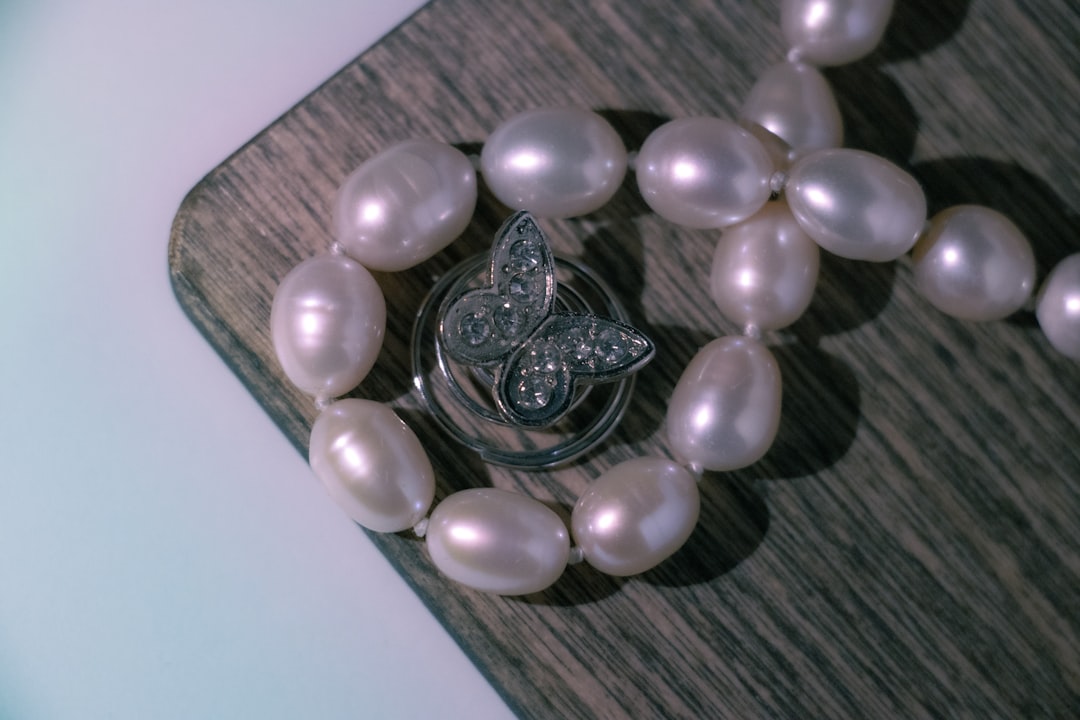
Real natural and cultured pearls often show minute variations in surface, colour and reflection. Under soft daylight or a loupe, you may see subtle ridges, fine texture or differences from pearl to pearl.
Imitation pearls may look more uniform or show a surface coating that appears glassy, glittery or paint-like. However, this clue is not decisive. Fine cultured pearls can be very clean and closely matched, while sophisticated imitations can be deliberately textured.
Check the drill holes
Drill holes can reveal how the surface relates to the material beneath it.
- Look for chipped or peeling coating around the hole, which can suggest an imitation surface layer.
- Check whether the colour and lustre continue naturally toward the edge.
- Notice heavy adhesive, ragged drilling or damage, which may indicate poor construction but does not by itself identify the pearl.
Do not enlarge, scrape or probe a drill hole. Destructive testing can damage the jewelry and still may not provide a certain answer.
Compare pearls within the piece
In a strand or multi-pearl design, look for small differences in shape, surface and overtone. Cultured pearls commonly vary, even when they have been carefully matched.
Perfect uniformity can be a reason to look more closely, but it is not proof of imitation. High-quality cultured pearls can be selected for close matching, and handmade designs may intentionally mix different shapes or colours.
To understand why variation occurs, see why no two pearls are exactly the same.
Consider weight and temperature carefully
Glass imitation pearls may feel heavier than plastic ones, while some real pearls feel relatively substantial for their size. Pearls may also feel cool at first contact and warm against the skin.
Neither clue is reliable on its own. Glass, shell and other imitation materials can mimic the weight or temperature response of real pearls. Settings and metal components also change how a finished piece feels.
What about the tooth test?
The “tooth test” is often mentioned because nacre may feel slightly gritty while some imitation coatings feel smooth. We do not recommend relying on it: textured imitations can give a similar sensation, and contact with teeth introduces oils and a risk of abrasion.
Most importantly, the test cannot distinguish a natural pearl from a cultured pearl. If the piece is valuable, sentimental or delicate, leave it untested and use professional identification when certainty matters.
Clues that can suggest an imitation
One clue is not proof, but several together may justify further checking:
- Visible peeling or pooling of coating near drill holes
- Mould seams or identical repeated surface patterns
- A very flat, painted or glittery appearance
- Perfectly identical shape and colour with no visible selection variation
- A material description that avoids “cultured” or “imitation” entirely
- A price and claim that seem inconsistent, such as an inexpensive strand described as rare natural pearls without documentation
Use these as questions to ask, not as a verdict.
Tests to avoid
- Scraping with a blade: damages the surface and is unnecessary.
- Acid or vinegar: can attack pearl material.
- Heat or flame: can burn, crack or discolour pearls and damage thread or adhesive.
- Dropping or bounce tests: risk chipping, loss and impact damage.
- Ultrasonic cleaning as a “test”: pearls should not be placed in ultrasonic equipment.
A test that harms the piece is not a useful consumer method.
What professional testing can confirm
Gemological laboratories can use X-radiography and other analytical methods to examine internal structure. This can help determine whether a pearl is natural or cultured and whether it formed in freshwater or saltwater.
That distinction cannot reliably be made from surface appearance alone. A professional pearl identification report is most appropriate for valuable natural-pearl claims, important heirlooms, insurance, resale or disputed material descriptions.
A local jeweler can perform an initial inspection, but ask whether the final identification requires a gemological laboratory.
A safe at-home checking sequence
- Read the invoice and product description.
- Inspect the surface in soft, neutral light.
- Use a loupe to examine drill holes without touching them with tools.
- Compare the pearls for natural-looking variation and deliberate matching.
- Consider weight and temperature only as supporting clues.
- Stop if the piece is valuable, antique, damaged or uncertain.
- Choose professional identification when the answer affects value.
Continue with our Pearl Guide for clear explanations of pearl types, shapes, sizes and natural variation.
Frequently asked questions
Does the tooth test prove pearls are real?
No. It may provide a surface clue, but some imitations can feel textured and the test cannot distinguish natural from cultured pearls.
Are perfectly round pearls fake?
No. Cultured pearls can be very round, and high-quality strands may be closely matched. Roundness should not be used as proof either way.
Can a jeweler identify pearls by looking?
An experienced jeweler may recognise strong clues, but natural-versus-cultured identification and difficult imitations can require laboratory instruments.
What documents should I ask for?
Ask for a written material description and any treatment information. For valuable claims, request a report from a qualified independent gemological laboratory.